

ANC Headset Pressure? Try This 7-Day Comfort Protocol
Posted by Global Teck Worldwide Staff on 5th Jan 2026
ANC Headset Pressure? Try This 7-Day Comfort Protocol
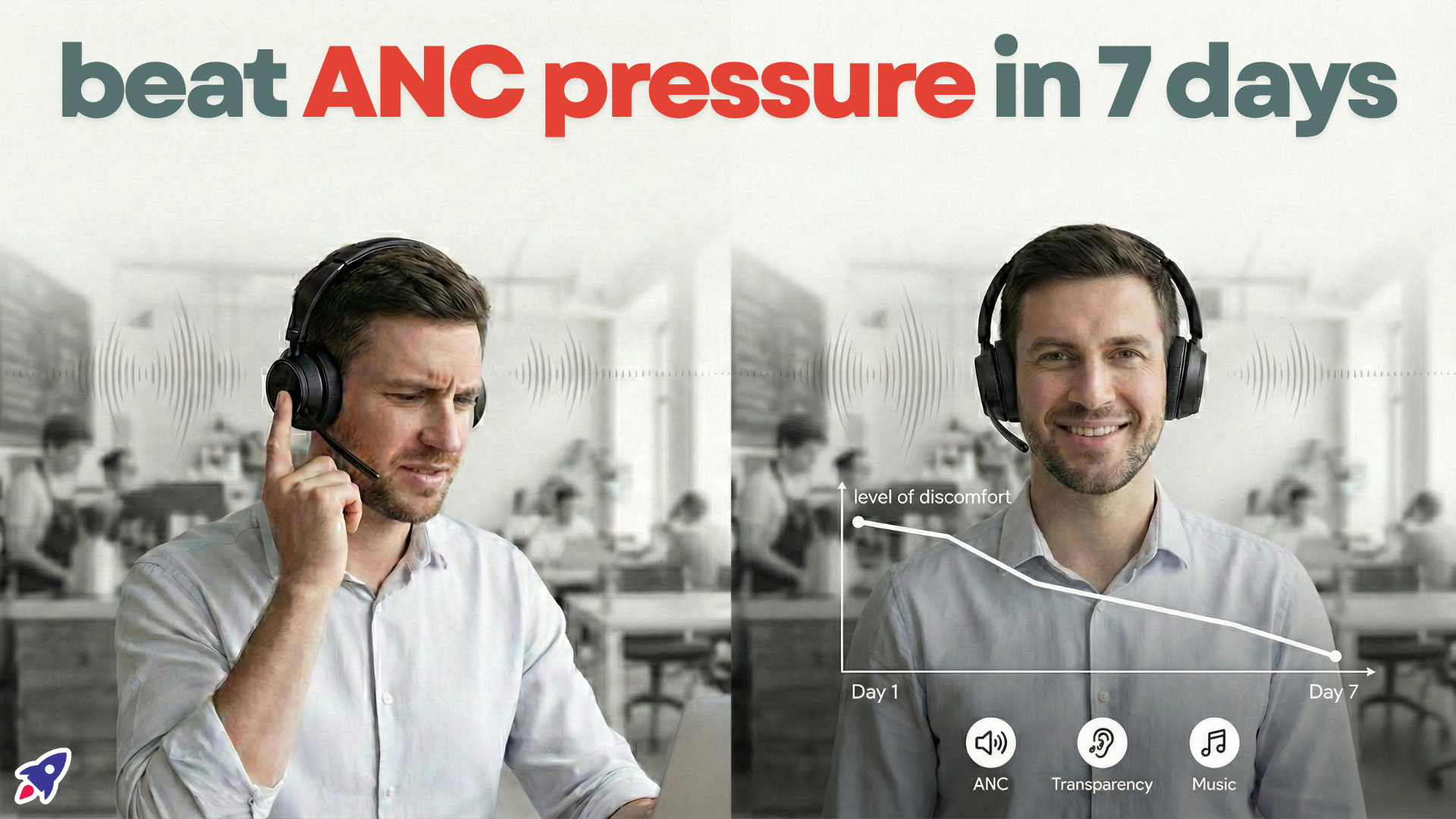
You finally treat yourself to an ANC headset so you can work like a civilized adult… and five minutes later your ears feel “weird.”
Not loud-weird. More like elevator-weird. Like your eardrums are mildly offended by your life choices.
So now you’re stuck:
- Keep using it and feel the pressure
- Turn ANC off and listen to the office blender meeting its destiny
- Return the headset and go back to repeating “Sorry—can you say that again?” like it’s your full-time job
Here’s the good news: for a lot of people, ANC comfort improves with acclimation—short, controlled sessions that let your brain stop treating noise-canceling like a suspicious magic trick. The “pressure” feeling is often linked to how ANC reduces low-frequency sound (it can feel like pressure even when air pressure isn’t actually changing).
Below is a simple, safe 7-day protocol you can follow—plus a few business-grade ANC headsets we recommend when your goal is clear calls, fewer distractions, and gear that behaves.
Who This Is For?
If you want active noise canceling for focus and call clarity—but your ears aren’t immediately thrilled—this is for you.
Especially if you’re:
- Taking calls in a busy home (kids, dogs, neighbors with leaf blowers)
- Working in an open office where everyone’s “quick question” becomes your problem
- On Zoom/Teams all day and trying to avoid end-of-day brain melt
- Switching between laptop + phone and you need your headset to keep up
- Sensitive to that “ear pressure / eardrum suck” sensation when ANC turns on
Get the Focus Without the “Ugh”
ANC is supposed to feel like relief. If it’s not, you don’t need to quit—you need to ramp up.
Try this mindset: you’re training comfort the same way you’d break in a new pair of shoes… except your feet aren’t involved and your coworkers benefit too.
- Short exposure sessions: You build tolerance without “powering through” discomfort.
- Quiet-first approach: Your ears adapt faster when you start with less sensory chaos.
- Repeatable tracking: You’ll know if you’re improving—or if something’s off and it’s time to stop.
Make ANC Work Better With a Better Seal
Here’s the unsexy truth: a lot of ANC “pressure” complaints get worse when the fit is sloppy.
A better seal means your headset doesn’t have to work as hard to cancel noise, and you don’t have to crank the volume like you’re DJ’ing your own meeting.
- Cushions/fit: A stable fit reduces micro-adjustments (and that constant “something feels off” sensation).
- Passive isolation helps ANC: Better natural blocking = smoother cancellation experience.
- Consistent positioning: Your mics also behave better when the headset sits the same way every time.
Keep Calls Professional Even When Your Environment Isn’t
ANC is for your ears. Great call quality is for your reputation.
The best work headsets combine cancellation + mic performance + platform certification, so your voice stays clear even when the world around you is auditioning for chaos.
Look for benefits like:
- Open-office microphone performance: Helps prevent your caller from hearing everything behind you.
- Teams/UC certification: Fewer “Why is my audio doing that?” moments during meetings
- Smart controls: Mute, answer, and volume controls that don’t require a scavenger hunt.
The 7-Day ANC Comfort Protocol (Simple + Trackable)
Open your notes app and track three things:
- Discomfort score (1–10)
- Session length
- Where you used it (quiet room, office, coffee shop, etc.)
Rules of the road:
- If you feel pain, headaches, or dizziness, stop and consider talking to a clinician. (Comfort training should never feel like injury.)
- Start in quiet. You’re building tolerance, not testing your limits.
Day 1: 5 minutes ANC-on, quiet room • No music at first. Just let your brain experience “quiet.” • If it feels weird, that’s the point (briefly).
Day 2: 2 sessions × 5–7 minutes, quiet room Take at least 2–3 hours between sessions.
Day 3: 10 minutes, light background noise Think: HVAC hum, distant chatter—not a full call center stampede.
Day 4: 15 minutes, add low-volume audio Keep volume modest. You’re not trying to overpower discomfort.
Day 5: 20 minutes, take a real call Short call, friendly setting. Not your most important client.
Day 6: 30–45 minutes, normal work block Use mute/unmute, move around, do your usual routine.
Day 7: 60 minutes, full focus session If comfort is improving, you’re on track. If not, you may do better with adjustable ANC levels or a different headset style.
Why It Matters
When ANC feels comfortable, you stop fighting your headset and start using it the way you bought it to use it:
You stay focused longer. You sound more confident. You waste less time repeating yourself. And you avoid those awkward moments where your client hears your environment before they hear you.
Help / Service
Picking an ANC headset can get weirdly specific, weirdly fast (your platform, your work noise, your sensitivity, your device setup… it adds up).
If you want, reach out through our contact form and tell us:
- What you use (Teams/Zoom/Webex, laptop/phone)
- Where you work (home, open office, call center)
- What you hate most (noise, mic pickup, comfort, connectivity)
We’ll help you narrow it down so you get a headset that sounds sharp, feels comfortable, and doesn’t turn your day into a troubleshooting hobby.
Need help picking the right headset or speakerphone?
Contact Global Teck Worldwide